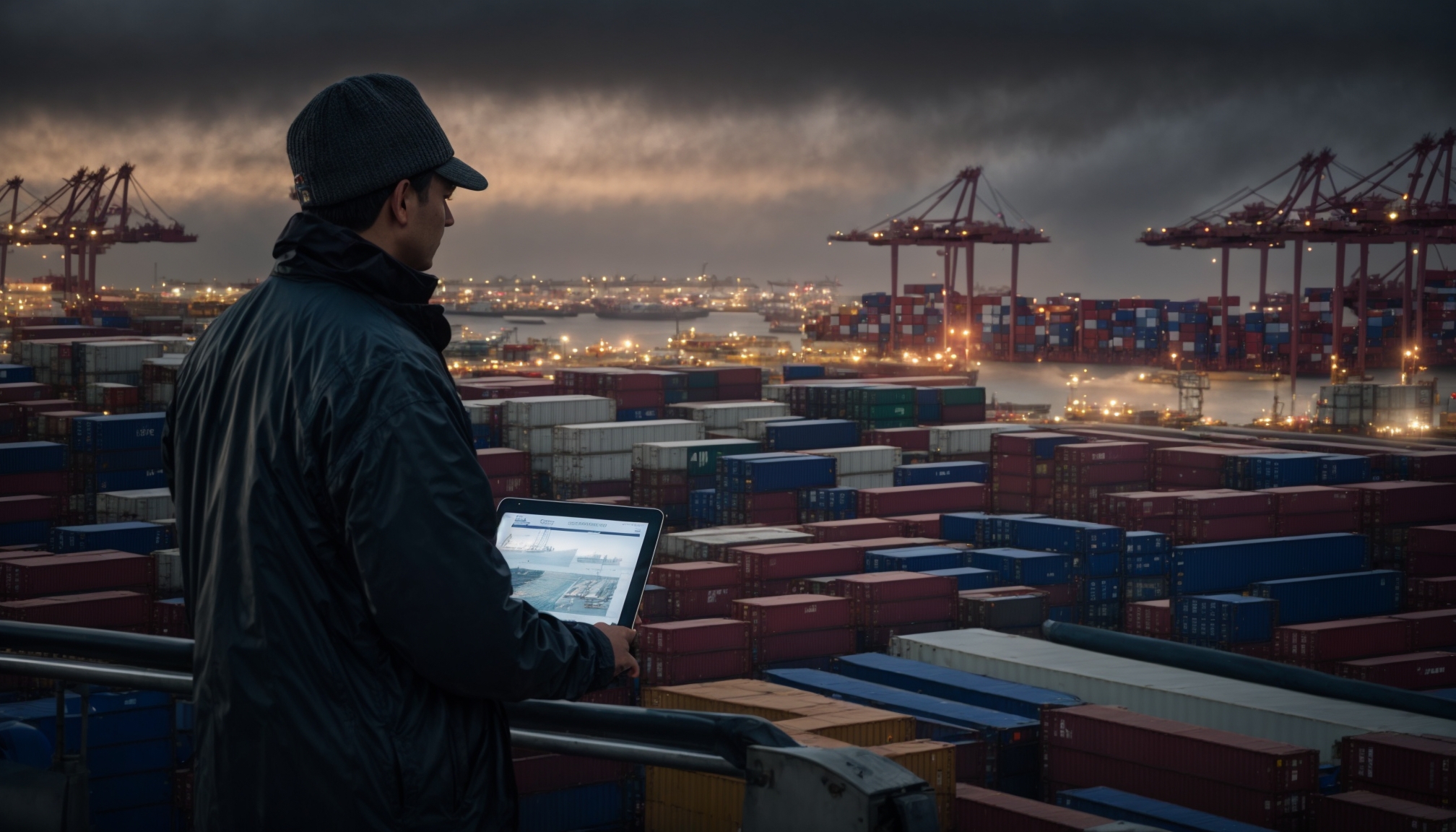
[SITE_NAME] – Shippers now face severe delays as the container shipping market outlook turns uncertain amid shortages and port congestion.
The current container shipping market outlook reflects tight capacity, volatile rates, and fragile schedules. Many exporters struggle to secure space on vessels. Importers worry about empty shelves and missed launch dates. Freight forwarders must renegotiate contracts and rethink routing. Because of that, planning just a few weeks ahead no longer feels safe.
This container shipping market outlook is shaped by overlapping shocks. Demand patterns changed quickly. Port operations faced labor constraints. Equipment repositioning failed to keep pace. Carriers adapted slowly to new trade flows. As a result, imbalances in global freight networks deepened.
Persistent container shortages now define the container shipping market outlook across many tradelanes. Empty boxes are often stacked where demand is weak. However, exporters in high-demand regions cannot find enough equipment. Bookings are rolled. Production slows. Working capital sits in warehouses while goods wait for a slot on a ship.
Several structural drivers explain these shortages. First, unexpected demand spikes for consumer goods disrupted forecasts. Second, blank sailings limited the return of empty containers. Third, inland congestion delayed repositioning from depots to ports. This combination reduced effective capacity. Therefore, competition for available boxes intensified.
Meanwhile, leasing companies review the container shipping market outlook before committing new capital. They weigh long-term returns against short-term spikes. Because of this, new container supply lags behind current demand. Even when manufacturers increase production, delivery times are long.
Port congestion sits at the center of the container shipping market outlook. Vessels queue for berths. Turnaround times stretch from hours to days. In some hubs, yard utilization runs near maximum. Containers pile up on quays. Inland logistics cannot absorb the flow efficiently.
On the other hand, each delay amplifies the shortage. Boxes stay unavailable while ships wait offshore. Terminal labor faces pressure to clear backlogs. Truck appointments become scarce. Rail capacity cannot always match surges. Consequently, the same physical container completes fewer round trips per year.
In addition, schedule reliability deteriorates across entire service networks. Carriers must skip ports or reroute loops. Feeder services miss connections. Barge and rail operators replan timetables. This broader disruption reinforces a negative container shipping market outlook for time-sensitive supply chains.
Pricing behavior strongly reflects the strained container shipping market outlook. Spot rates surge when exporters outbid each other for space. Surcharges appear for peak season, congestion, and equipment imbalance. Some shippers pay premiums for guaranteed loading. Others shift cargo to alternative ports or modes.
Meanwhile, annual contracts lose their stability. Many service agreements include index-linked clauses or renegotiation triggers. Because of that, budgeting becomes harder for importers and exporters. Finance teams struggle to forecast landed costs. Procurement teams must justify higher freight spending to management.
Read More: How shippers can build resilient global logistics strategies
This environment forces shippers to reassess their negotiating position. Larger volume buyers may still secure priority access. However, smaller firms often face take-it-or-leave-it terms. They must accept less favorable conditions or delay shipments. Therefore, freight strategy has become a board-level topic.
Changes in trade patterns also shape the container shipping market outlook. Nearshoring and friendshoring policies redirect flows. Some manufacturers move production closer to end markets. Others diversify away from single-country sourcing. Over time, these choices alter port hierarchies and service networks.
Carriers respond by adjusting rotations and alliances. New services appear between emerging hubs. Existing services gain additional calls or drop unprofitable ones. Feeder networks expand around secondary ports. As a result, future congestion may move from one region to another.
For logistics planners, this evolving container shipping market outlook requires dynamic modeling. Lead times will not remain fixed. Reliability will vary by lane. Capacity may tighten in some corridors while easing in others. Because of this, static routing decisions quickly become outdated.
Shippers can still reduce risk despite a challenging container shipping market outlook. First, they can book earlier than usual and share reliable forecasts with carriers. Second, they can diversify ports of loading and discharge. Third, they can strengthen ties with multiple forwarders, not just one.
Furthermore, packaging and order profiles can change. Some firms consolidate shipments into fewer, fuller containers. Others break down volumes to secure space on multiple sailings. Meanwhile, cross-docking and transloading options near ports can increase agility. These tactics distribute risk across routes and schedules.
Technology also supports better decisions within this container shipping market outlook. Real-time visibility tools show where containers sit, how long they dwell, and when they move. Predictive analytics highlight lanes at risk of delay. As a result, planners can reallocate inventory or switch modes earlier.
Looking ahead, the container shipping market outlook includes both easing pressures and structural change. Additional vessel capacity will gradually enter the fleet. Some ports will clear their backlogs and expand infrastructure. Digital initiatives may streamline documentation and customs processes.
Nevertheless, volatility will likely remain. Climate-related disruptions, labor disputes, and geopolitical tensions can quickly create new bottlenecks. Therefore, shippers cannot rely on a full return to past stability. Instead, they must design supply chains that absorb shocks more gracefully.
At a strategic level, the container shipping market outlook pushes companies toward resilience over pure cost minimization. Dual sourcing, regional distribution centers, and flexible transport contracts become standard tools. Over time, firms that adapt to these conditions will protect service levels and margins more effectively.
Ultimately, the container shipping market outlook challenges every stakeholder in global logistics to collaborate more closely. Carriers, ports, shippers, and technology providers must share data and align incentives. Only then can container shortages ease, congestion recede, and trade flows regain a more sustainable rhythm.
This website uses cookies.