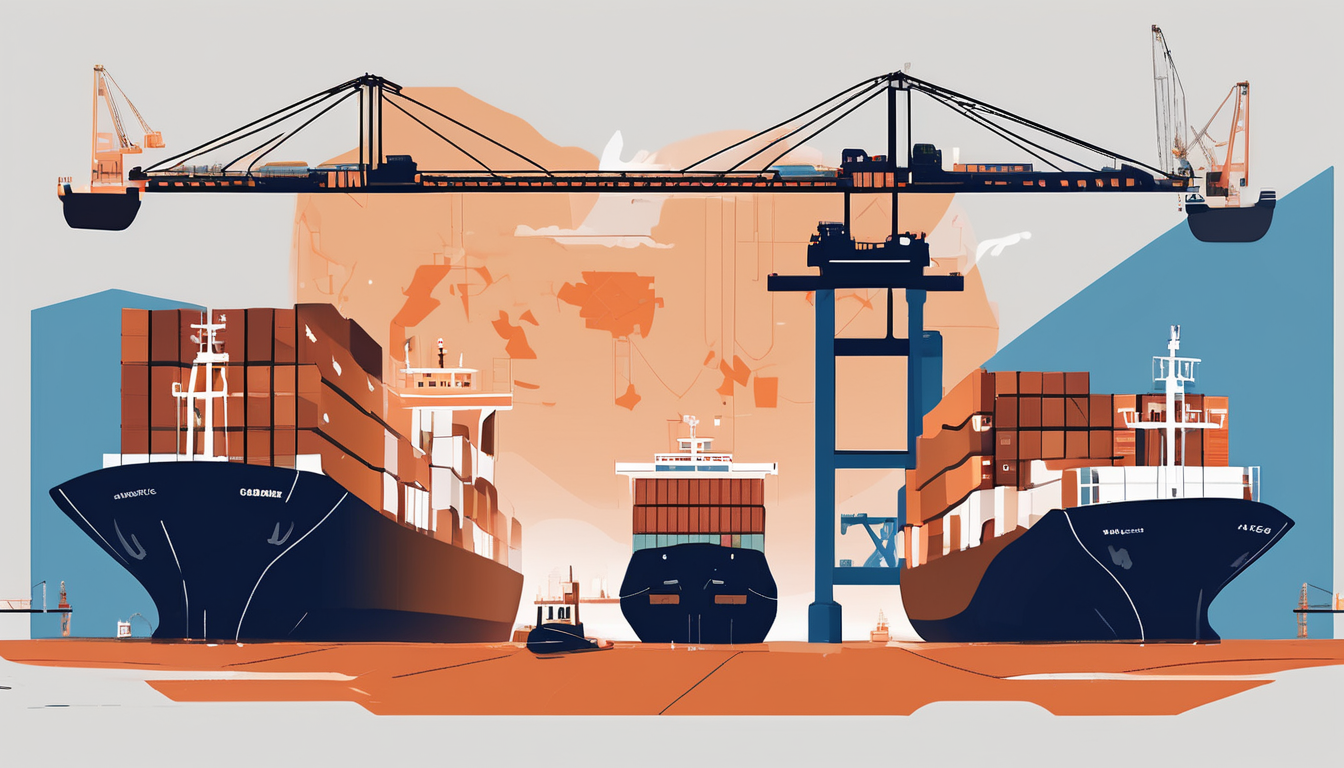
The Blackmore Group – Solusi Inovatif Logistik dan Perdagangan shows how predictive cargo delay analytics is helping logistics players cut disruption and keep shipments moving on time.
Global trade relies on tight schedules, dan even minor disruptions can trigger costly domino effects across supply chains. Predictive cargo delay analytics uses data, algorithms, and automation to signal potential delays before they occur. Companies then adjust routes, schedules, or resources, reducing demurrage fees and customer dissatisfaction.
Ports, shippers, and carriers face growing pressure to provide accurate ETAs and transparent status updates. However, traditional tracking methods depend on historical averages and manual updates, which fail during sudden disruptions. Predictive cargo delay analytics closes this gap by combining live data with advanced models that anticipate future congestion, weather issues, or operational bottlenecks.
In addition, real-time visibility strengthens trust among supply chain partners. When stakeholders receive earlier warnings about risk, they can respond proactively instead of reacting after deadlines are missed.
Modern systems use machine learning to detect patterns that humans miss. Predictive cargo delay analytics ingests data from vessel positions, port calls, customs events, trucking telematics, and historical performance. Algorithms then estimate the probability and duration of potential delays for each shipment or lane.
Key inputs often include route history, seasonality, dwell time at specific terminals, and performance of particular carriers. As a result, forecasts become more accurate over time. However, these models need continuous retraining, because trade lanes evolve, weather patterns shift, and operational rules change.
On the other hand, simple rule-based systems lack the flexibility to adapt. Predictive cargo delay analytics overcomes this limitation by learning from fresh data every day. Companies that invest in robust data pipelines can see faster improvements in forecast precision.
Accurate forecasts depend on rich, reliable data. Predictive cargo delay analytics typically combines several categories of information to form a complete operational picture.
First, there is transport data, such as AIS vessel tracking, flight schedules, and truck GPS traces. These feeds reveal actual movement, speed, and waiting times. Second, port and terminal systems provide timestamps for gate moves, yard operations, and loading windows.
Meanwhile, customs and regulatory data indicate inspection risk and clearance durations. Weather services contribute forecasts for storms, fog, or high winds that might close ports or slow vessels. Finally, commercial data, including booking patterns and contract terms, helps prioritize which shipments receive early intervention.
When integrated correctly, these streams allow predictive cargo delay analytics to reflect real conditions instead of static assumptions.
Different logistics actors apply predictive cargo delay analytics in distinct ways, but the goal is the same: fewer surprises. Ocean carriers use predictive insights to refine schedules, manage port rotation, and optimize speed to align with berth availability. Therefore, they reduce fuel usage and idle time.
Ports and terminals rely on forecasts to organize yard space, crane allocation, and gate appointments. If predictive cargo delay analytics signals late vessel arrival, planners can reassign equipment to other tasks, improving asset utilization.
Shippers and freight forwarders use predicted ETAs to adjust production, inventory, and downstream distribution. In addition, they can switch modes, redirect cargo, or inform customers earlier when high-risk delays appear.
Read More: How predictive analytics is transforming modern logistics operations
Insurers and financial institutions also benefit. When predictive cargo delay analytics quantifies risk more precisely, insurers can design dynamic premiums and offer performance-based products to logistics clients.
Operational savings remain a primary motivation for adoption. Predictive cargo delay analytics helps cut detention and demurrage charges, overtime labor, and extra storage costs. Companies avoid last-minute firefighting, which often demands expensive workaround solutions.
Customer service also improves once ETAs become more reliable. Consignees can plan labor, warehouse slots, and downstream deliveries with higher confidence. As a result, service providers that share predictive insights often gain a competitive advantage and strengthen long-term contracts.
Furthermore, predictive cargo delay analytics contributes to sustainability goals. Fewer unexpected waits and optimized routing reduce fuel burn across fleets. Over time, this lowers emissions and supports regulatory compliance around environmental performance.
Under the surface, predictive cargo delay analytics relies on several technical layers. Data integration platforms collect and normalize information from port systems, telematics devices, and enterprise software. Cloud infrastructure then stores and processes this growing dataset.
Machine learning frameworks build and train models that predict arrival times, dwell durations, or congestion levels. Meanwhile, APIs feed forecasts into transport management systems, control towers, and customer portals.
User interfaces present predictions in dashboards, alerts, and exception queues. Because business users need clarity, modern tools emphasize visual timelines, risk indicators, and recommended actions generated by predictive cargo delay analytics.
Despite the promise, implementation is not trivial. Many organizations struggle with incomplete or inconsistent data. Predictive cargo delay analytics magnifies these weaknesses if the underlying records contain large gaps or conflicting timestamps.
Data governance, standardized event codes, and clear ownership of each data source are essential. In addition, companies should start with defined use cases, such as improving ETA accuracy on a few priority trade lanes, before scaling across the network.
Change management is equally important. Operations teams must understand how predictions are generated and when to trust them. Training, documentation, and feedback loops help refine predictive cargo delay analytics so it matches field reality.
Looking ahead, predictive cargo delay analytics will likely merge with prescriptive decision engines and automation. Instead of only flagging risks, systems will automatically rebook capacity, send updated delivery slots, or trigger dynamic pricing adjustments.
As data coverage expands and models improve, smaller logistics players will gain access through platforms and marketplaces. Meanwhile, regulators and port authorities may use aggregated predictions to smooth traffic flows at a regional level.
Ultimately, organizations that embrace predictive cargo delay analytics will be better positioned to handle volatility and maintain service promises. By combining technology, data discipline, and collaborative processes, the freight ecosystem can reduce friction and move closer to truly resilient trade.
The Black More Group - Digital technology is reshaping cargo hubs, cutting average delivery time by 22% according to a…
The Black More Group - A recent internal audit revealed that 32% of cargo delays stem from inefficient loading sequences,…
The Black More Group - Global supply chains collapsed by 30% during the 2021 Suez Canal blockage, exposing a brutal…
The Black More Group - freight networks lose over $100 billion annually due to visibility gaps, yet predictive analytics can…
The Black More Group - The global supply chain landscape is undergoing a seismic shift as traditional methods falter under…
The Black More Group - Global supply chains lose approximately $1.6 trillion annually due to inefficiencies in shipping and logistics,…
This website uses cookies.